Liquid Resistance Starter (LRS) for Slip Ring Motors & Drive Systems

Design, Manufacturing, Commissioning & Service—Worldwide, including the USA & Central Asia.

The "DEKRA certified Quality Management ISO 9001" mark proving effectiveness of optimized processes.
The "Conformité Européenne" mark signifying that products sold in the EEA have been assessed to meet high safety, health, and environmental protection requirements.
The "UL Certified" mark verifying that a product, component, or material meets stringent scientific safety requirements.
The Canadian Standards Association mark verifying that the product has been independently tested and meets rigorous North American and international safety or energy efficiency standards.
The "Eurasian Conformity" mark indicating products that conform to all technical regulations of the Eurasian Customs Union.

* Standardization where appropriate—certification where required.

We start you up.
Since 1917.

MKS traces its origins back to BEA, a leading manufacturer of liquid resistance starters founded in 1917.

Closer to your project.
Wherever, whenever you need us.

Three strategic locations, backed by a worldwide network of service partners for rapid response.

Europe (HQ)

MKS Anlasser & Elektrotechnik GmbH

distance

Königskamp 16
52428 Jülich
Germany

America

MKS Engineering Inc.

distance

2220 Northmont Parkway
Suite 250
Duluth, GA 30096
USA

Central Asia

MKS Central Asia LLC

distance

15 Zavodskaya Street
Arshaly Settlement
Akmola Region, 020200
Republic of Kazakhstan

What is an LRS?
Liquid Resistance Starters

A Liquid Resistance Starter (LRS)—also called an electrolytic starter or liquid rheostat—uses an electrolyte tank with electrodes to provide variable resistance during motor start-up. It enables controlled starting of large medium-voltage drives by limiting inrush current and controlling starting torque, particularly for slip-ring (wound-rotor) induction motors used in mills, crushers, conveyors, and shredders, even under weak-grid conditions. The result is smoother acceleration, reduced mechanical stress on the drivetrain, and lower voltage dips on the power supply, making it ideal for heavy-inertia loads and frequent start cycles.

electric_bolt
Reduced Inrush Current
sync
Smooth Motor Acceleration
factory
Ideal for Heavy-Duty Applications

Quick Contact
Get in touch

Three Proven LRS Product Lines
Engineered for Robust Starting Performance and Precise Control.

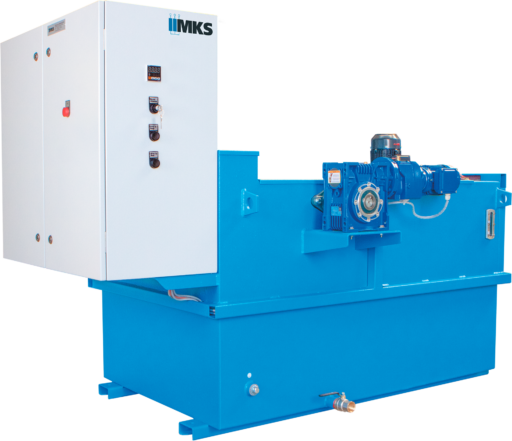
A compact design Liquid Resistance Starter (LRS) from the MFA series implementing a blade electrode system.

MFA / DMFA Series

Blade Electrode System
electric_bolt
100–10,000 kW
local_police
Patented Electrode Alignment
compress
Compact Construction

The MFA series of liquid resistance starters impress with their straightforward and sturdy design and high level of costeffectiveness. Their specially-developed and patented blade electrode alignment allows for a very compact design that also simplifies servicing and maintenance. Liquid resistance starters of the MFA 1-5 series are excellently-suited to smaller and medium power range applications from 100 to 10.000 kW.

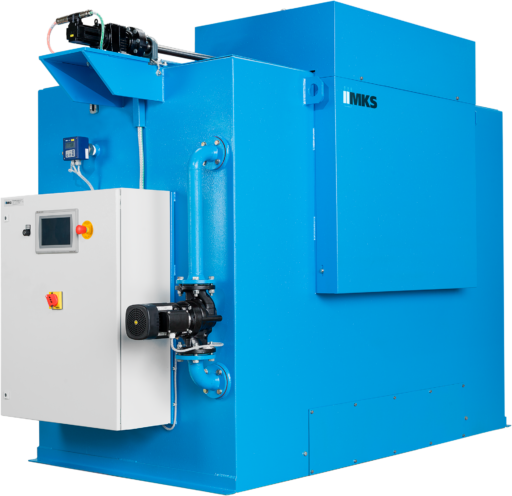
A Liquid Resistance Starter (LRS) from the AFA series with a ring electrode system.

AFA / DAFA Series

Ring Electrode System
electric_bolt
2,000–20,000 kW
beenhere
Proven BEA Ring Electrodes
factory
Heavy-Duty Design

AFA 25–105 series liquid resistance starters are based on the original 1917 design produced by BEA. Their production and further development was taken up by MKS in 2001. These liquid resistance starters incorporate the classic BEA ring electrode system.

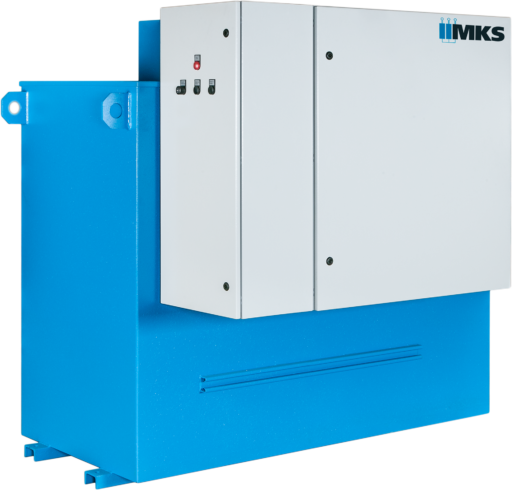
A Liquid Resistance Starter (LRS) from the SFAK series featuring a high speed servo drive system.

SFAK Series

High Speed Servo Drive System
electric_bolt
1,500–20,000 kW
autoplay
Dynamic Control
manufacturing
Ideal for Metal Shredding

The SFAK series of liquid resistance starters covers a power range from 1,500 to 20,000 kW of engine output. They are usually used as liquid resistance starters for metal shredding drive systems due to their highly dynamic control and positioning characteristics.

Complete Drive Starter Bundle
Delivered as One Solution.

Motor
LRS
Switchgear
Slip-Resistor

We supply the full package: motor, LRS, switchgear and slip resistor. All components are selected and tuned to work seamlessly together — so you get fewer interfaces, clearer responsibility, and a faster path from order to commissioning.

Industries

Our Products Set the Standard Worldwide.

This exceptional position results from our high standards of reliability and quality, our dedication to our customers and confidence in our products. All the more reason for being proud of our extensive reference list. MKS liquid resistance starter and drive systems can be found in more than 100 countries worldwide.

Cement

Energy

Metal Recycling

Minerals & Mining

Power Plants

Pump Stations

Shredder Plants

Sugar Cane

Your Industry

News

Approved by NASA

MKS Engineering Inc. was awarded a contract by NASA to supply a liquid resistance starter for a 15,000 HP slip ring motor and replace the existing LRS for the Unitary Plan Wind Tunnel at NASA Ames Research Center.

Following a successful Factory Acceptance Test at the MKS Anlasser- und Elektrotechnik GmbH facility in Jülich, Germany, the MKS Liquid Starter was approved by NASA’s project engineers. The starter was subsequently shipped to NASA Ames Research Center, where it was successfully installed and commissioned.

We are proud to have contributed to this prestigious project and to have supported NASA with a reliable and customized starting solution. Being part of the commissioning team was an honor and a valuable experience for everyone involved.

MKS General Manager Alexander Krekker standing in front of the NASA Unitary Plan Wind Tunnels.

FAQ
Liquid Resistance Starters (LRS)

The most important questions about how an LRS works, where it fits best, and what’s needed for proper sizing.

A Liquid Resistance Starter (LRS)—also called an Electrolytic Starter or Liquid Rheostat—is a motor starting system that uses an electrolyte tank with electrodes to create a variable resistance. It is commonly used to start large motors in a controlled way, helping manage starting current and starting torque, especially on slip ring (wound rotor) induction motors.

An LRS is primarily used with slip ring motors / wound rotor induction motors (WRIM), often in medium-voltageand high-power applications. These motors are typically selected when high starting torque is needed while keeping the starting current and grid impact under control.

An LRS is a strong choice when:

  • You have heavy starting conditions or high inertia loads (e.g., mills, crushers, conveyors)
  • The starting current must be limited (e.g., weak grid, generator operation, voltage dip constraints)
  • You need a smooth, controlled acceleration to reduce mechanical stress on the drive train

An LRS uses an electrolyte and electrodes to provide a controllable resistance during start-up. As the motor accelerates, the resistance is adjusted to achieve a stable, predictable run-up. Typical systems also include bypass/shorting contactors, as well as level and temperature monitoring for safe operation.

  • A soft starter mainly reduces the electrical stress during motor start by controlling voltage/current and is commonly used with squirrel-cage induction motors.
  • A VFD (variable frequency drive) controls frequency and voltage, enabling full speed control across the operating range (more functionality, higher complexity).
  • An LRS is especially relevant for slip ring motor applications where you need high starting torque, controlled acceleration, and reduced grid impact in demanding heavy-duty environments.

Yes. Recycling and shredder drives often face highly variable loads and require robust, controlled torque behavior. In these applications, dynamic resistance control can help stabilize start-up and operation. For example, solutions like MKS SFAK are typically used in metal recycling / shredder drive systems where demanding conditions require a proven, heavy-duty approach.

Yes. Depending on the application, LRS concepts can be designed for multi-drive setups or parallel motor systems, allowing coordinated start-up behavior and improved handling of load peaks in complex industrial drive trains.

For a fast and accurate pre-selection, it helps to provide:

  • Motor data (kW/HP, voltage, frequency; for slip ring motors ideally rotor/secondary data if available)
  • Required run-up time and starts per hour (duty cycle)
  • Application details (e.g., mill, crusher, conveyor, shredder) and load/inertia information
  • Grid conditions (e.g., weak grid, generator supply, permitted voltage drop)

Modern LRS systems are designed for robust operation with a manageable maintenance routine. Typical checks include electrolyte level, temperature, and conductivity/concentration depending on the system design. In many cases, existing resistance starter systems can also be retrofitted or modernized to extend service life, improve reliability, and better match current operational needs.

Do you have questions that aren’t covered in our FAQ?

Manager of an industrial company wearing a hard hat contacting MKS on the phone.

Share a few details about your application, and our engineering team will quickly evaluate whether an LRS is the right fit for your use case.

* Request a quick technical assessment with no obligation.